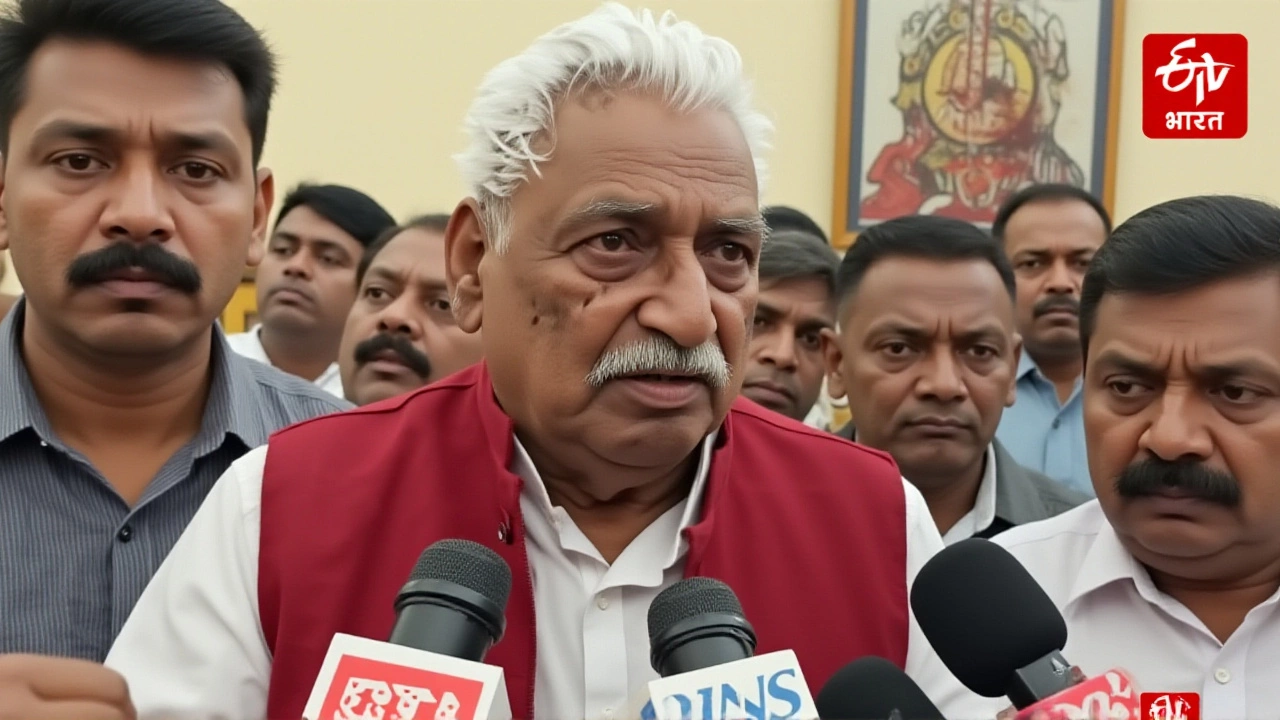
When Akilesh Yadav, National President of the Samajwadi Party, addressed party workers in Lucknow, he didn't mince words. The former chief minister set a staggering goal: win every single seat in the upcoming Uttar Pradesh Legislative Assembly electionsUttar Pradesh.
Speaking at a rally on Friday, Yadav declared that the SP’s aim is not just to maximize seats but to achieve a "100 percent" victory margin across all 403 constituencies. It’s an ambitious, almost audacious target for a state as politically complex and populous as Uttar Pradesh.
Here’s the thing: claiming you’ll sweep every seat isn’t just rhetoric; it’s a psychological play. It signals confidence to voters and demands total commitment from ground-level workers. But can they actually pull it off?
The Anatomy of an Ambitious Claim
The details emerging from the event are straightforward but significant. Yadav emphasized that the party organization must be strengthened booth-by-booth. He told cadres that there should be no room for losing even a single seat in future elections.
"The SP’s goal is to win 100 percent of the seats," Yadav stated, according to reports from India TV, Live Hindustan, and Dainik Bhaskar. He urged workers to prepare with this absolute mindset, leaving no constituency unattended or under-prepared.
This isn’t about winning by a majority. It’s about dominance. In a state where political alliances shift like sand, aiming for a clean sweep suggests Yadav believes the current anti-incumbency against the ruling party is strong enough to carry them to an unprecedented level of power.
Context: Why 2027 Matters
To understand why this statement carries weight, you have to look at the timeline. The next assembly elections in Uttar Pradesh are scheduled for 2027. That gives the opposition roughly three years to organize, campaign, and counter the incumbent government’s narrative.
Currently, the Bharatiya Janata Party (BJP), led by Chief Minister Yogi Adityanath, holds power. The SP, along with other opposition parties, has been trying to build a cohesive front to challenge them. Yadav’s comment also implicitly references the Bahujan Samaj Party (BSP) and its leader Mayawati, who remain key players in the state’s caste-based political arithmetic.
The mention of these rival entities in media coverage highlights the competitive landscape. Yadav isn’t just talking to his own base; he’s sending a message to rivals that the SP intends to reclaim its historical stronghold.
Ground Game vs. Grand Statements
Political analysts often separate campaign slogans from operational reality. While a 100% win rate is statistically improbable in any multi-party democracy, especially one as diverse as India, the intent behind the message is clear.
"It’s a motivational tool," noted one political observer familiar with UP dynamics. "By setting the bar at infinity, you ensure that workers don’t settle for ‘good enough.’ If you aim for 100%, you might get 60%. If you aim for 50%, you might end up with 30%."
The strategy relies on granular organization. Yadav instructed workers to focus on booth-level management. This means identifying voter demographics, addressing local grievances, and ensuring high turnout in favor of SP candidates. It’s a labor-intensive approach that requires deep penetration into rural and urban wards alike.
Broader Implications for Indian Politics
If the SP were to significantly increase its seat count in 2027, it would reshape the national political map. Uttar Pradesh is the largest electoral college in India, contributing 80 seats to the Lok Sabha (lower house of parliament). A dominant performance here could influence the balance of power in New Delhi.
Furthermore, this aggressive stance puts pressure on other opposition parties to align or compete. Will the BSP join forces? Will regional factions consolidate? Or will fragmentation continue to benefit the BJP? These questions hang over the 2027 horizon.
The ripple effects extend beyond party lines. Voters in UP are increasingly polarized between development-focused narratives and identity-based politics. Yadav’s appeal taps into the latter, leveraging social justice themes that have historically driven SP support.
What’s Next?
Watch for organizational restructuring within the SP. Expect announcements regarding candidate selection criteria, internal audits of weak constituencies, and potential alliances. The coming months will reveal whether this bold claim is backed by concrete action plans or remains purely rhetorical.
Also, keep an eye on the BJP’s response. Incumbent governments rarely sit idle when opponents declare war. Counter-campaigns, welfare scheme rollouts, and leadership changes may follow to neutralize the SP’s momentum.
Background Deep Dive
The Samajwadi Party, founded in 1992 by Mulayam Singh Yadav, has long been a major force in Uttar Pradesh. Akilesh Yadav served as Chief Minister from 2012 to 2017. Since then, the party has faced challenges, including internal dissent and electoral setbacks.
In the 2022 assembly elections, the SP won 41 seats, a significant improvement from previous years but far from a majority. The BJP secured a landslide victory with 325 seats. To go from 41 to 403 is a monumental leap. However, political tides turn quickly. Anti-incumbency, economic factors, and leadership charisma can all shift voter behavior dramatically over a five-year period.
Historically, complete sweeps are rare in UP due to its fragmented electorate. Yet, history is also full of surprises. The 2017 election saw the BJP dominate, but the 2012 poll showed the SP’s ability to mobilize massive support. Yadav is betting that 2027 will mirror the latter scenario, amplified by unified opposition sentiment.
Frequently Asked Questions
What exactly did Akilesh Yadav say about the 2027 elections?
Akilesh Yadav stated that the Samajwadi Party aims to win 100 percent of the seats in the upcoming Uttar Pradesh Legislative Assembly elections. He emphasized that the party should not accept losing any single constituency and urged workers to prepare for a total sweep.
Why is the 2027 election significant for Uttar Pradesh?
The 2027 election is crucial because it will determine the state government for the next five years. Uttar Pradesh is India's most populous state, so its political outcome heavily influences national politics. It also serves as a referendum on the current BJP-led administration's performance.
Is winning 100% of seats realistic for any party in UP?
Statistically, it is highly unlikely. Uttar Pradesh has a diverse electorate with multiple strong regional and national parties. Complete sweeps are rare in such a fragmented landscape. However, the statement serves more as a motivational benchmark than a literal prediction.
Who are the main competitors mentioned in this context?
The primary competitor is the Bharatiya Janata Party (BJP), currently led by Chief Minister Yogi Adityanath. Other key players include the Bahujan Samaj Party (BSP) led by Mayawati, which competes for similar voter bases in certain regions.
Where was this announcement made?
The announcement was made during a party program in Lucknow, the capital city of Uttar Pradesh. Reports from India TV, Live Hindustan, and Dainik Bhaskar covered the event, highlighting Yadav's address to party workers and leaders.