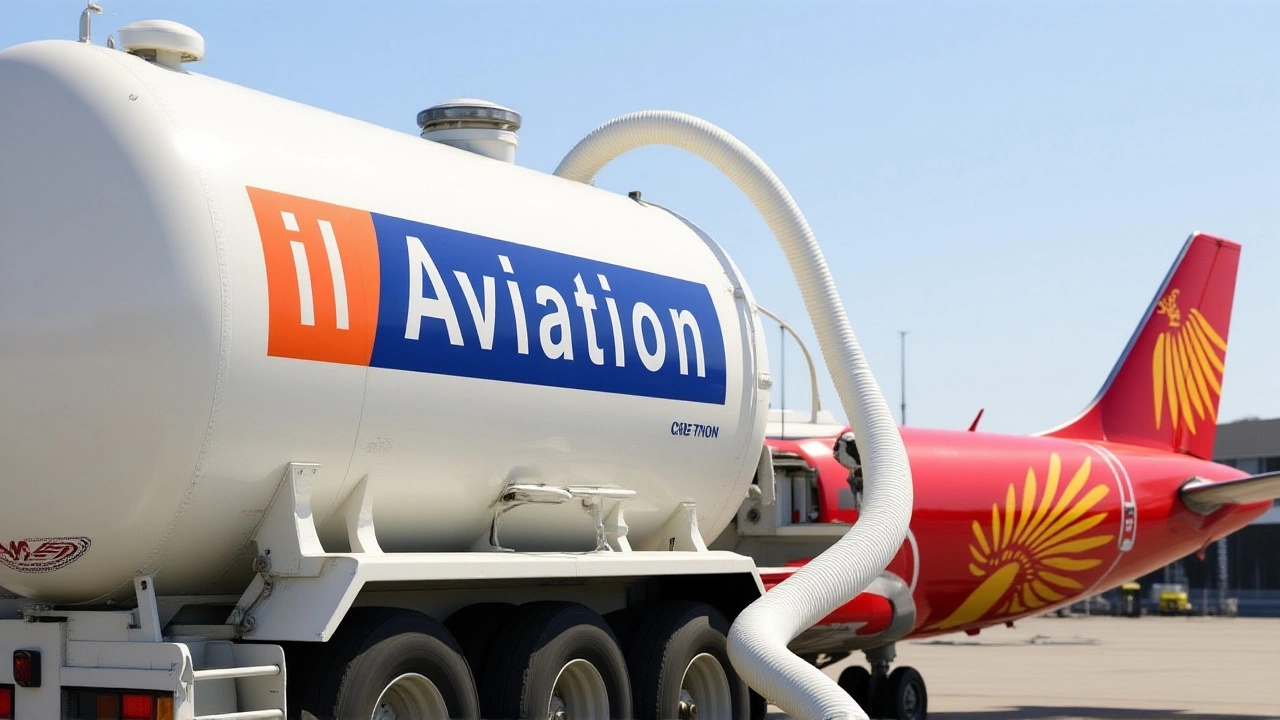
When Murli Manohar Jaiswal, Minister of State for Civil Aviation of Government of India, laid out the country’s new green fuel roadmap in parliament earlier this month, the aviation industry took notice. The plan isn’t just about cutting carbon; it’s a strategic pivot toward energy independence and global compliance. Starting in 2027, India will mandate a 1% blend of Sustainable Aviation Fuel (SAF) or ethanol-mixed jet fuel for international flights. By 2030, that figure jumps to 5%. It’s a gradual shift, but the implications are massive for a nation that is already the world’s third-largest aviation market.
The twist is that this isn’t an overnight revolution. Contrary to some rumors circulating online about a mandatory 10% SAF blend by 2027, government sources have clarified that the targets are indicative and phased. The focus is on stability and scalability. Here’s the thing: India doesn’t want to shock the system. Instead, it’s building a ladder. One percent in 2027, two percent in 2028, and five percent by 2030. This approach aligns perfectly with global regulatory frameworks, specifically the International Civil Aviation Organization’s (ICAO) Carbon Offsetting and Reduction Scheme for International Aviation (CORSIA), which enters its mandatory phase in 2027.
A Phased Approach to Decarbonization
The details matter here. While domestic flights aren’t immediately bound by these specific blending mandates, the initial push is squarely aimed at international routes. Why? Because that’s where the pressure is highest. Under CORSIA, airlines operating international flights must offset their carbon emissions. By integrating SAF into the fuel mix, Indian carriers can reduce their liability under this scheme while simultaneously lowering their environmental footprint.
An anonymous government official told Hindustan Times that the shift toward ethanol-mixed aviation fuel will be fully operational by mid-2027. The strategy involves starting with low-percentage blends and gradually increasing them as production capacity scales up. This isn’t theoretical talk either. Earlier trials have already taken place. For instance, AirAsia operated a commercial domestic flight from Pune to Delhi using a 0.75% blended fuel. It was a small step, but it proved that the technology works within India’s existing infrastructure.
The feedstock for this transition is diverse. SAF isn’t made from crude oil. It’s produced from renewable sources like used cooking oil, waste fats, municipal solid waste, and non-food crops. According to data from Testbook.com, depending on the feedstock and production pathway, SAF can reduce lifecycle greenhouse gas emissions by up to 80% compared to traditional jet fuel. That’s a significant drop. And since India generates millions of tons of waste annually, the raw material is practically waiting to be utilized.
Boosting Production Capacity
But you can’t fly on policy alone. You need fuel. To meet these targets, the government is aggressively boosting production capabilities. Through the Pradhan Mantri JI-VAN (Sustainable Mission for Value Addition through Innovative Technology) scheme, financial support is being provided to biofuel plants, including those producing SAF. The incentives are working. More than 30 new distilleries have been established recently, driven by government subsidies.
The math is compelling for investors. The government offers interest subvention on loans taken by project promoters from banks. The subsidy is set at 6% per annum or half of the bank’s lending rate, whichever is lower, for five years, including a one-year moratorium. This reduces the capital cost significantly, making ethanol and SAF production more attractive. As a result, over two dozen new distilleries are coming online, expanding the country’s ability to produce ethanol and other biofuels.
Industry bodies like ISMA (Indian Sugar Mill Association) are collaborating with the government to refine the biofuel program and roadmap. Distilleries have already conducted multiple trials supplying ethanol for low-carbon jet kerosene. These experiments have helped identify logistical and technical hurdles, ensuring that when the 2027 deadline arrives, the supply chain is ready.
Global Alignment and Future Policy
India’s move isn’t happening in isolation. The EU, UK, US, Japan, and Singapore are all moving toward similar sustainable aviation goals. By aligning its policies with international best practices, India positions itself not just as a compliant participant but potentially as a future exporter of SAF. A recent analysis suggested that India could become a net exporter of sustainable aviation fuel in the coming decade, leveraging its agricultural waste and growing refining capacity.
However, the regulatory framework is still being finalized. The same government official mentioned that a comprehensive SAF policy document is expected to be released for stakeholder consultation next month. This draft will likely cover certification standards, quality control, and safety protocols. Once the consultation period ends, the formal notification should follow quickly. The timeline is tight, reflecting the urgency of the 2027 CORSIA mandate.
Experts note that while the 5% target by 2030 is ambitious, it’s achievable given the current momentum. The key challenge remains cost. SAF is currently more expensive than conventional jet fuel. But as production scales and technology improves, prices are expected to fall. Until then, government incentives and carbon pricing mechanisms under CORSIA will help bridge the gap.
Frequently Asked Questions
Is the 10% SAF blend target real?
No, the 10% target by 2027 is a misconception. Official sources clarify that the government has set indicative targets of 1% for 2027, 2% for 2028, and 5% for 2030 for international flights. There is no immediate mandatory 10% blend requirement.
How does this affect domestic flights?
Currently, the specific blending targets apply primarily to international flights to comply with ICAO’s CORSIA regulations. However, as production capacity increases, domestic carriers are also encouraged to adopt SAF, with trials already conducted on domestic routes like Pune-Delhi.
What is CORSIA and why does it matter?
CORSIA is the Carbon Offsetting and Reduction Scheme for International Aviation. It requires airlines to offset carbon emissions from international flights. Using SAF helps airlines reduce their carbon footprint directly, thereby lowering the amount they need to offset financially, which becomes mandatory starting in 2027.
Where does the fuel come from?
Sustainable Aviation Fuel is produced from renewable feedstocks such as used cooking oil, waste fats, municipal solid waste, and non-food crops. This makes it distinct from fossil-based jet fuel and allows for a reduction in greenhouse gas emissions by up to 80%.
When will the final SAF policy be released?
A draft SAF policy is expected to be released for stakeholder consultation next month. After the consultation period, the government plans to issue a formal notification, establishing the legal and regulatory framework for SAF production and usage in India.